

The best Martal competitor depends on the kind of outbound engine your company needs, because providers differ in their channels, service models, and use of AI. This comparison looks at around 10 alternatives to Martal, with customer reviews, competitor rankings, and fit as the main points of comparison. The leading option for one company may be a poor fit for another, so the details matter.
It makes sense to want a clear shortlist before investing time in an outbound partnership, but rankings alone can make the choice seem simpler than it is. This guide compares Martal competitors through reviews, rankings, and differences in approach, then outlines practical criteria for judging fit. The right partner is the one whose approach aligns with the buyers you need to reach and how your team wants to grow.
Key Takeaways
- Match an outbound partner’s channels and service model to your target buyers and internal sales process, rather than choosing by ranking alone.
- Use customer reviews to look for recurring themes in communication, execution, and fit, while treating rankings as one comparison point.
- Compare providers side by side on the criteria that matter to your company, then narrow the shortlist to the approaches that support your growth priorities.
- Consider how AI and automation fit into the partner’s lead generation approach and the way prospects move through your sales process.
- The Fraction’s automated and AI lead generation systems, sales process, and compelling offer may suit teams seeking a more structured path to new business.
Choosing an outbound partner based on company needs
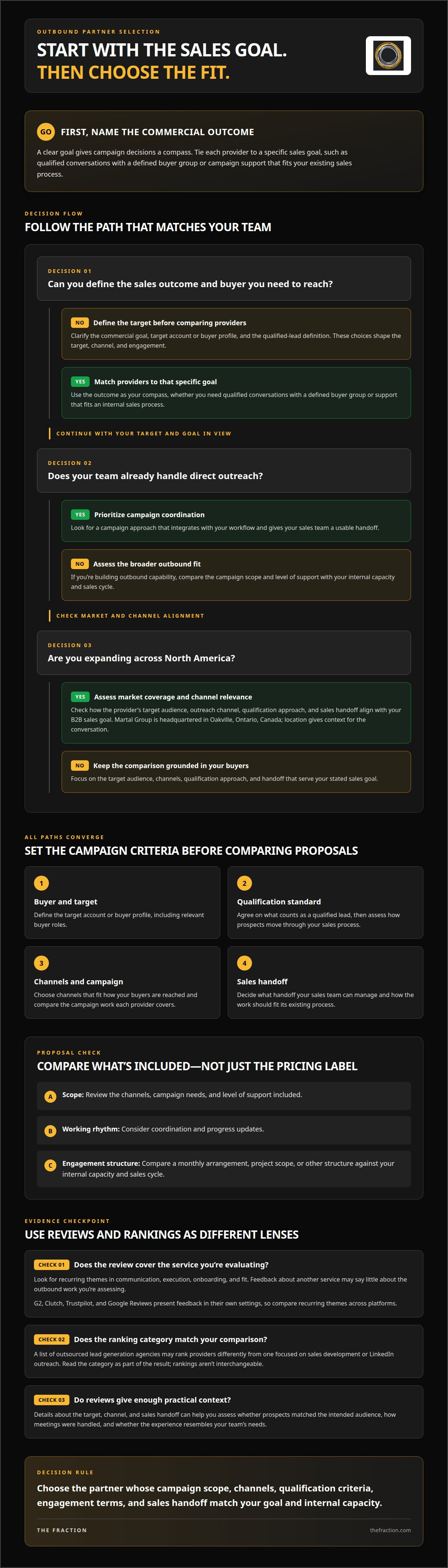
Start with the commercial outcome, then match the outbound partner’s work to it, because a clear goal gives every campaign decision a compass. A B2B tech company entering North America may need qualified conversations with a defined buyer group, while a firm with an internal sales team may need campaign support that fits its existing process. Those priorities shape the target, channel, and engagement. When comparing Martal competitors, tie each option to a specific sales goal.
Martal Group is headquartered in Oakville, Ontario, Canada, a useful detail for companies thinking about North American market coverage. Location gives context for a conversation, while the campaign’s target audience, outreach channel, qualification approach, and handoff to internal sales show how the work aligns with your B2B sales goal.
Compare scale without mistaking it for fit
Estimated revenue and employee counts offer a snapshot of organizational scale. Use the table as context while assessing each organization’s target markets, outbound capabilities, and campaign fit. A larger figure describes scale; your sales goals determine whether that scale matters.
| Organization | Estimated revenue | Employees | Decision relevance |
|---|---|---|---|
| Ethnicity Matters | $14.2 million | 62 | Scale context; assess campaign fit separately |
| Consumer Choice | $6 million | 29 | Scale context; assess campaign fit separately |
| BuySell.com | $12.4 million | - | Revenue context; assess campaign fit separately |
| Rotman Marketing | $0.5 million | 4 | Scale context; assess campaign fit separately |
| Destination Ontario | $41 million | 149 | Scale context; assess campaign fit separately |
| AIR MILES Rewards | $13.5 million | - | Revenue context; assess campaign fit separately |
Estimated revenue and employee counts provide context for organizations such as Destination Ontario and AIR MILES Rewards. Consider them alongside the engagement, channels, and sales objective: scale alone doesn’t show how an outbound campaign will serve your business.
Founding year offers another point of comparison, but your target and engagement needs should guide the decision. A newer provider may suit a specialized campaign, while an established organization may fit a different scope. Weigh operating history alongside audience, qualification, communication, and sales handoff details to build a fuller picture.
Assess pricing and engagement terms
Pricing depends on the engagement’s scope, channels, campaign needs, and level of support, so compare proposals by what they include. Review coordination and progress updates, then consider whether a monthly arrangement, project scope, or other structure fits your internal capacity and sales cycle. Focus on the work covered, not just the pricing label. This makes comparisons among Martal competitors more practical.
Before choosing an engagement, define your target account or buyer profile, qualification standard, and the handoff your sales team can manage. Then select channels that fit how those buyers are reached. A team already handling direct outreach may prioritize campaign coordination, while a team building outbound capability may need a broader fit.
- For B2B tech teams: prioritize a clear target market, buyer roles, and qualified-lead definition.
- For teams with internal sales: focus on workflow integration and a usable handoff.
- For companies expanding across North America: assess market coverage and channel relevance.
Choose a partner whose campaign scope, channels, qualification criteria, and engagement terms match your sales goal and internal capacity.
Customer reviews and competitor rankings
Rankings offer a starting point; customer reviews add detail, so use them as different lenses on an agency’s work. For Martal Group and each alternative, focus on feedback about the specific service you’re evaluating. A company’s reputation can span multiple offerings, industries, and customer types, so comments about another service may say little about its outbound work or your team’s needs.
Look at each review as a small window into the customer experience, then notice the details that help you picture the engagement. A comment about smooth onboarding describes the kickoff; feedback about qualified prospects or booked meetings speaks to campaign outcomes from that reviewer’s perspective. For example, a B2B tech team can give greater weight to feedback from companies with similar buyers and sales cycles.
G2, Clutch, Trustpilot, and Google Reviews each present customer feedback in their own setting, so compare recurring themes across platforms instead of treating every ranking as interchangeable. You might see repeated mentions of clear campaign updates, useful prospect qualification, or onboarding that required extra coordination. A detailed review brings one experience into focus, while patterns across reviews offer a broader view of an agency’s working style.
Rankings also depend on the category and criteria used to build a list. A comparison of outsourced lead generation agencies may order providers differently from one focused on sales development or LinkedIn outreach. Read the category as part of the result: it shows which providers are being compared. Martal Group may appear alongside different companies on different lists because each ranking has its own scope.
Look for practical context in reviews. “The team generated leads” describes an outcome broadly; a more detailed account might explain the target, channel, and sales handoff. Those details help you assess whether prospects matched the intended audience, how meetings were handled, and whether your sales team could take the next step. If your team has defined qualified prospects, specific feedback is easier to apply.
- Check fit: Compare reviewers’ industries with your market, such as B2B tech or professional services.
- Track themes: Notice recurring comments about onboarding, communication, outreach, and prospect quality.
- Read for context: Look for examples that describe the campaign and its handoff to sales.
- Separate evidence: Distinguish agency descriptions from customer accounts of their experience.
Connect review themes to how your sales team works. If reviews praise communication but describe mixed lead quality, they’re highlighting different parts of the engagement. A team with a defined qualification standard can use that distinction to assess fit. If you’re still shaping your target, prioritize alignment on the audience and campaign.
Revenue and company size provide organizational context; customer feedback offers insight into reported experiences. A larger agency may work across more industries, while a smaller partner may focus on a narrower model. Use reviews as one perspective in your decision, remembering that each account reflects the reviewer’s engagement and circumstances.
Use rankings to create a shortlist, then read reviews against your needs for audience, channel, onboarding, and meetings your team can advance. As you assess outsourced support and its place in your growth plans, executive growth strategy can provide a complementary perspective.
The Fraction: Automated & AI lead generation systems
The Fraction helps professionals build a more structured path to new business through automated and AI-powered lead generation systems. The system connects a compelling offer with outreach and a sales process designed to feel natural to prospects.
This approach may suit you if you’re ready to sharpen your offer, create a clearer way to reach potential clients, and make follow-up repeatable. Lead generation opens conversations, a well-shaped service gives prospects a reason to engage, and a sales process that doesn’t feel like selling supports the next step.
If you’re weighing outbound support and want to explore this approach for your business, contact The Fraction.
Build a pipeline your team can own
Choosing among Martal competitors is an opportunity to define what a healthier pipeline should enable for your business before the next campaign begins. Put that ambition into language your leadership, marketing, and sales teams can share, so your chosen partner supports a direction the organization can sustain.
That shared direction can support your next growth stage, whether you’re refining how your offer reaches the market or building a more consistent path from first conversation to new business. The Fraction helps shape that foundation with automated and AI lead generation systems, compelling offers, and a sales process that doesn’t feel like selling.
Bring your growth priorities to The Fraction and explore an approach that fits the business you’re building.
Your next stage of growth can begin with a clear, deliberate choice.
Frequently Asked Questions
What are the pros and cons of Martal Group versus other sales outsourcing companies?
Martal’s headquarters in Oakville, Ontario, offers context for companies considering North American coverage. Compare alternatives on channels, qualification, communication, handoff, and engagement scope. Reviews may highlight strengths such as clear updates or concerns such as mixed lead quality.
How do Martal Group and its competitors compare in services and target industries?
Providers differ in their channels, service models, and use of AI. Assess fit against your buyer group, geography, qualification approach, and sales handoff; relevant contexts include B2B tech, professional services, and companies expanding across North America.


